The short answer
A proxy is a stand-in that acts on someone else's behalf. The word comes from the Latin procuratio, "taking care of something for another", which is also where "procure" comes from. When you vote by proxy, someone casts your vote for you.
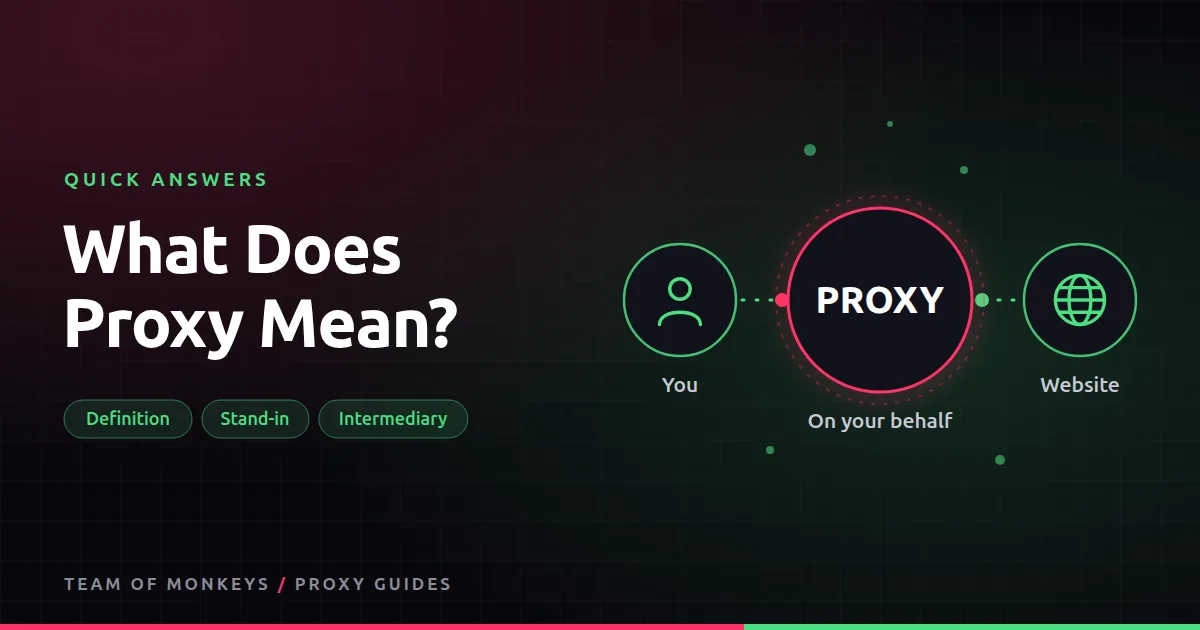
On the internet, a proxy server does the same job for web traffic. Your device asks the proxy to fetch a page, the proxy fetches it with its own IP address, and passes the answer back. The website talks to the proxy, not to you.
Other places you will see the word
- Networking: a proxy server, forward proxy or reverse proxy.
- Programming: JavaScript has a
Proxyobject that intercepts operations on another object. Same idea, different layer. - Statistics: a proxy variable stands in for something you cannot measure directly.
- Business and law: a proxy holder votes your shares at a company meeting.

Also known as
Proxy server, web proxy, proxy host, intermediary server, gateway (in some contexts).
Learn more
- What is a proxy server? The full plain-English guide
- How proxies work, step by step
- The proxy glossary, A to Z
- Proxy vs VPN: which one do you need?
- NIST's formal definition of a proxy
- NIST's definition of a proxy server
- Mozilla's explainer on proxy servers and tunneling
- Encyclopedia overview of proxy servers and their history
Affiliate disclosure: Team of Monkeys is an affiliate of Geonode, Webshare and Rayobyte. Links and banners marked as sponsored, and links to Geonode, Webshare and Rayobyte in the text, use our referral links, and we may earn a commission if you buy through them, at no extra cost to you. Our explanations and comparisons are written to be useful whichever provider you choose.
Editorial note: Proxy providers change their pools, features and prices often, so treat any figures here as typical ranges at the time of writing and confirm current terms with the provider before you buy.
Editorial note: Proxy providers change their pools, features and prices often, so treat any figures here as typical ranges at the time of writing and confirm current terms with the provider before you buy.