The short answer
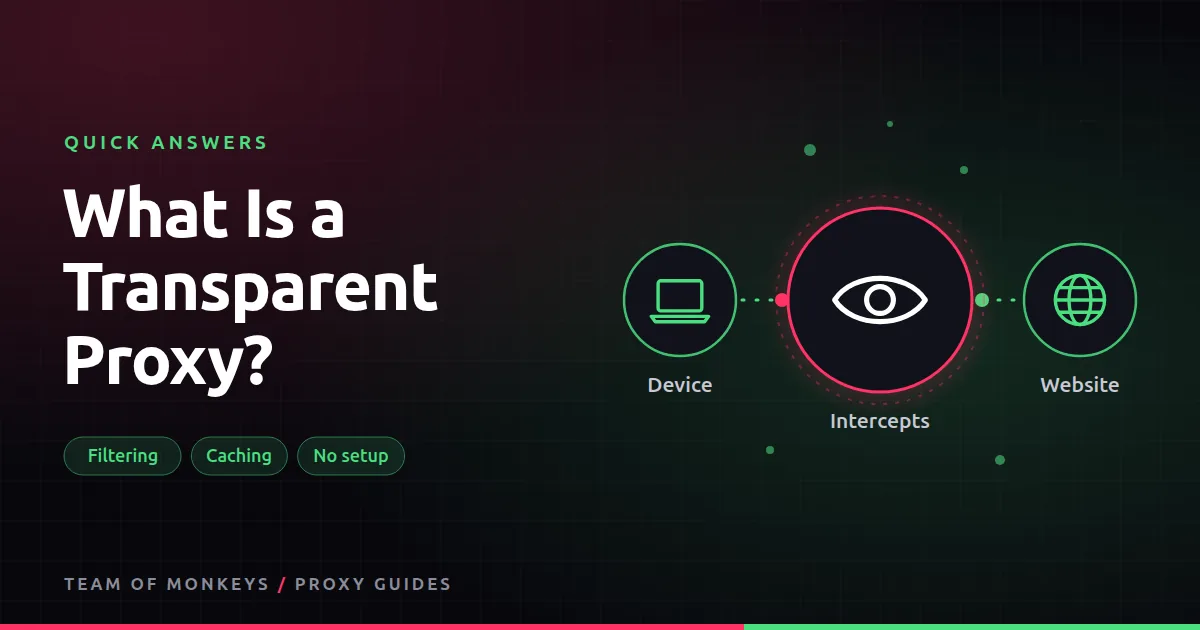
A transparent proxy sits on a network and catches traffic automatically, so you never configure it. It usually passes your real IP to websites. Its job is control, not privacy.
Where you meet one
- Schools and offices: content filtering and logging.
- Public Wi-Fi: login pages ("captive portals").
- ISPs and mobile carriers: caching and traffic management.
For HTTPS, a transparent proxy can only see which site you visit, unless your device has been set up to trust the organisation's certificate.

Also known as
Intercepting proxy, inline proxy, forced proxy.
Learn more
- Proxy anonymity levels
- What is an elite proxy?
- Forward vs reverse proxy
- What is X-Forwarded-For?
- NIST SP 800-41, firewalls and proxies
- RFC 9111, HTTP caching
- MDN on X-Forwarded-For
- The Squid caching proxy
Affiliate disclosure: Team of Monkeys is an affiliate of Geonode, Webshare and Rayobyte. Links and banners marked as sponsored, and links to Geonode, Webshare and Rayobyte in the text, use our referral links, and we may earn a commission if you buy through them, at no extra cost to you. Our explanations and comparisons are written to be useful whichever provider you choose.
Editorial note: Proxy providers change their pools, features and prices often, so treat any figures here as typical ranges at the time of writing and confirm current terms with the provider before you buy.
Editorial note: Proxy providers change their pools, features and prices often, so treat any figures here as typical ranges at the time of writing and confirm current terms with the provider before you buy.