The short answer
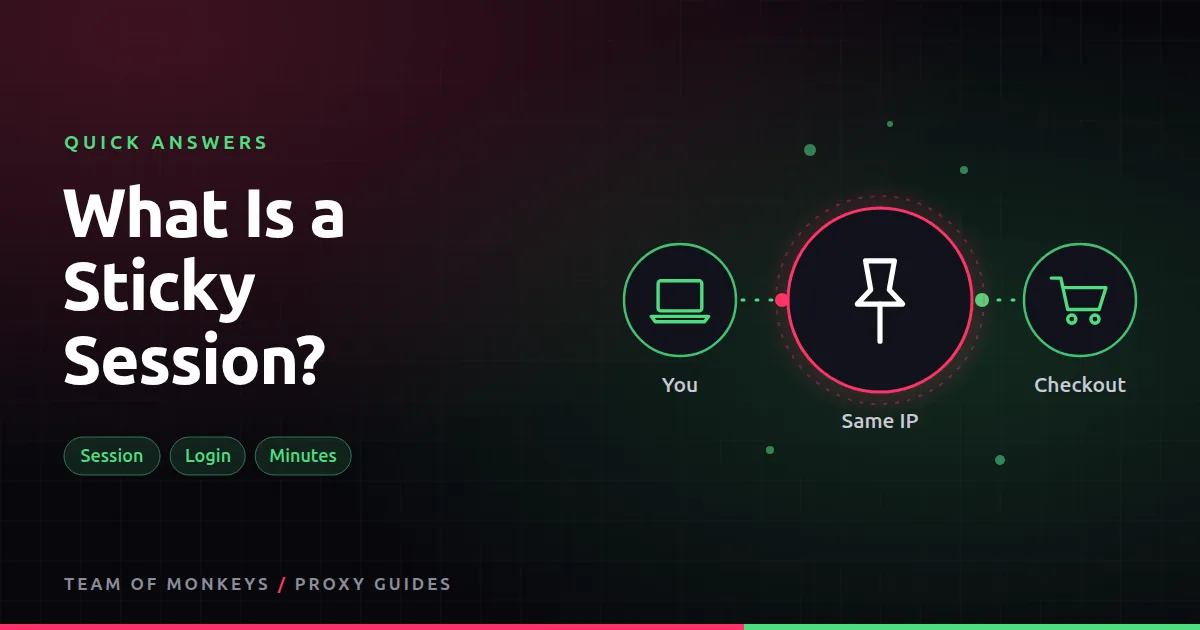
A sticky session tells a rotating proxy network to keep giving you the same IP for a while. You usually request it by adding a session ID to your proxy username, and the IP stays the same until the timer runs out or the home device behind it goes offline.
When to use one
Use sticky sessions whenever a website expects one visitor to keep one address: logging in, adding to a cart, checking out, filling a multi-page form or managing a social media account. Rotating on every request would look like a different person clicking each button.
If you need the same IP for days or weeks, buy a static residential (ISP) or dedicated proxy instead.

Also known as
Session persistence, sticky IP, session control, sticky port.
Learn more
- Sticky vs rotating sessions
- What is a rotating proxy?
- Static residential proxies
- Social media management proxies
- HTTP cookies standard (RFC 6265)
- RFC 9110, HTTP semantics
- OWASP on credential stuffing, why sites watch logins
- NIST authentication guidance
Affiliate disclosure: Team of Monkeys is an affiliate of Geonode, Webshare and Rayobyte. Links and banners marked as sponsored, and links to Geonode, Webshare and Rayobyte in the text, use our referral links, and we may earn a commission if you buy through them, at no extra cost to you. Our explanations and comparisons are written to be useful whichever provider you choose.
Editorial note: Proxy providers change their pools, features and prices often, so treat any figures here as typical ranges at the time of writing and confirm current terms with the provider before you buy.
Editorial note: Proxy providers change their pools, features and prices often, so treat any figures here as typical ranges at the time of writing and confirm current terms with the provider before you buy.