The short answer
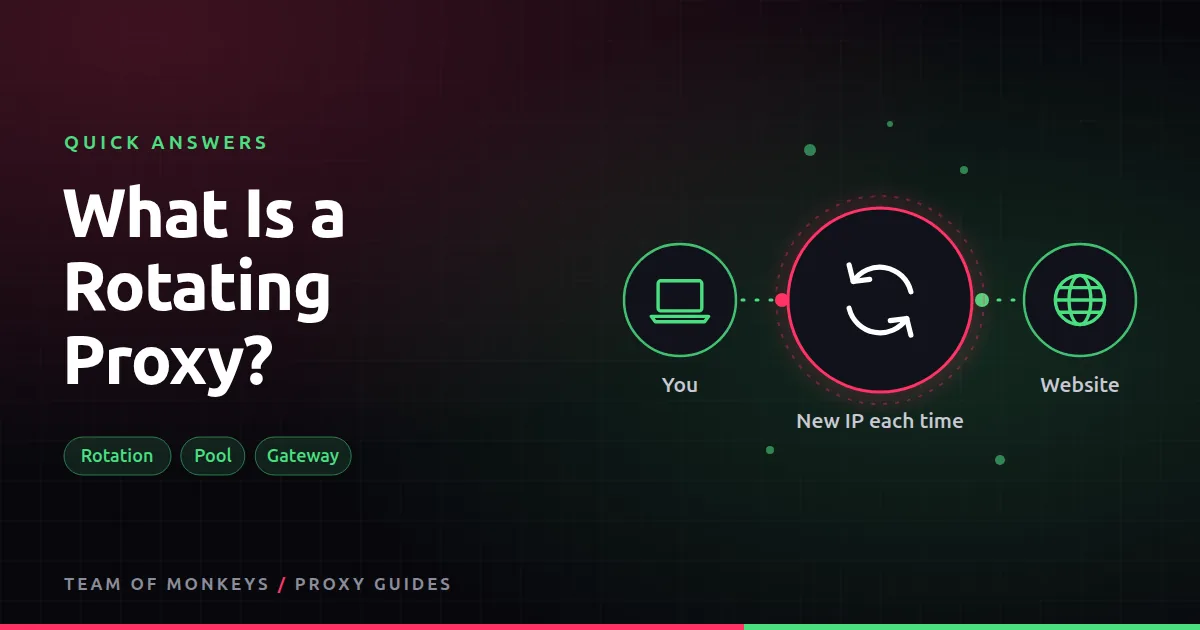
A rotating proxy is a single address you connect to (the gateway) that sends each of your requests out through a different IP from a large pool. You do not manage a list; the provider swaps IPs for you, either per request or on a timer.
When to use one
- Scraping many pages: spreading requests across thousands of IPs keeps each one under the site's rate limit.
- Not for logins: if you need the same IP for a whole session, for example a shopping cart or a social account, use a sticky session instead.

Also known as
Rotating residential proxy, backconnect proxy, proxy gateway, auto-rotating proxy, IP rotation.
Learn more
- What is proxy rotation? The full guide
- Sticky vs rotating sessions
- Backconnect proxies
- Proxy rotation strategies
- RFC 6585, the 429 Too Many Requests status
- MDN on 429 Too Many Requests
- Scrapy's downloader middleware, where rotation lives
- OWASP's automated threats list (the site owner's view)
Affiliate disclosure: Team of Monkeys is an affiliate of Geonode, Webshare and Rayobyte. Links and banners marked as sponsored, and links to Geonode, Webshare and Rayobyte in the text, use our referral links, and we may earn a commission if you buy through them, at no extra cost to you. Our explanations and comparisons are written to be useful whichever provider you choose.
Editorial note: Proxy providers change their pools, features and prices often, so treat any figures here as typical ranges at the time of writing and confirm current terms with the provider before you buy.
Editorial note: Proxy providers change their pools, features and prices often, so treat any figures here as typical ranges at the time of writing and confirm current terms with the provider before you buy.