The short answer
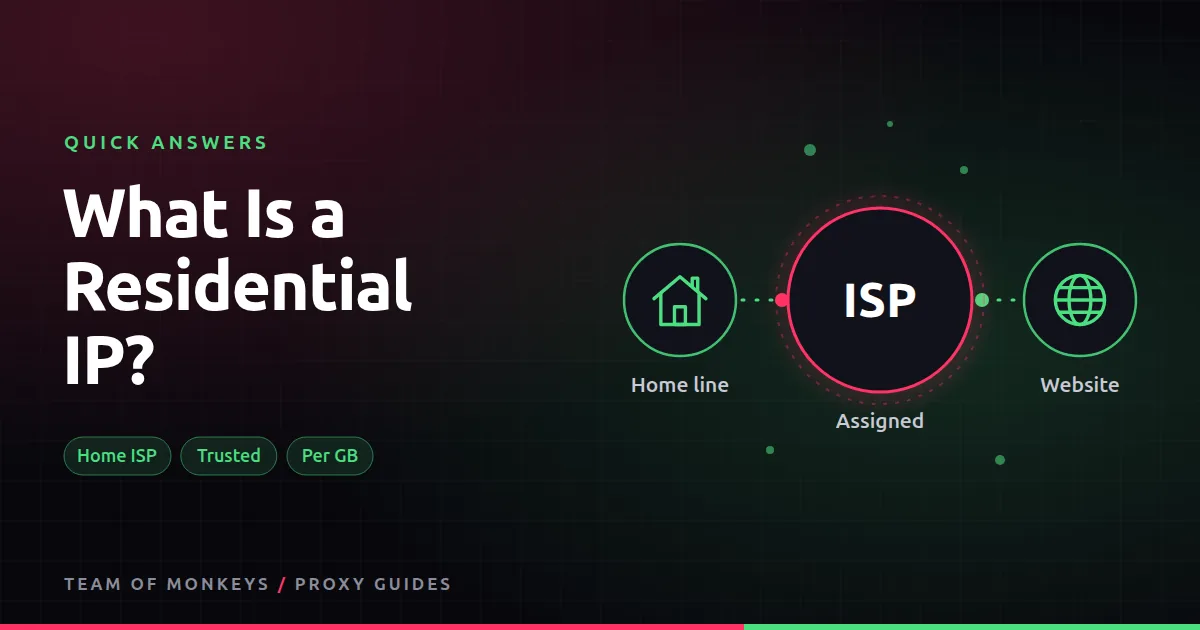
A residential IP is an IP address that an internet service provider (ISP) such as Comcast, BT or Deutsche Telekom assigns to a home broadband line. Because it is registered to a consumer ISP, a website sees it as an ordinary household visitor.
Why it matters for proxies
Residential proxies route your traffic through these home addresses, so your requests blend in with real users. That is why they get past blocks that stop datacenter IPs, and also why they cost more, usually priced per GB of traffic.
How the provider got access to those home connections matters. Reputable providers pay people or apps for consent. Criminal networks have built "residential proxies" from malware-infected devices, which law enforcement has taken down.

Also known as
Home IP, household IP, consumer IP, ISP-assigned IP, "resi" IP.
Learn more
- Residential proxies: the complete guide
- What is a datacenter IP?
- Ethically sourced proxies
- Residential vs datacenter proxies
- What an internet service provider is
- The US takedown of the 911 S5 residential proxy botnet
- FBI warning on residential proxy botnets
- The regional registries that allocate home IP blocks
Editorial note: Proxy providers change their pools, features and prices often, so treat any figures here as typical ranges at the time of writing and confirm current terms with the provider before you buy.