The short answer
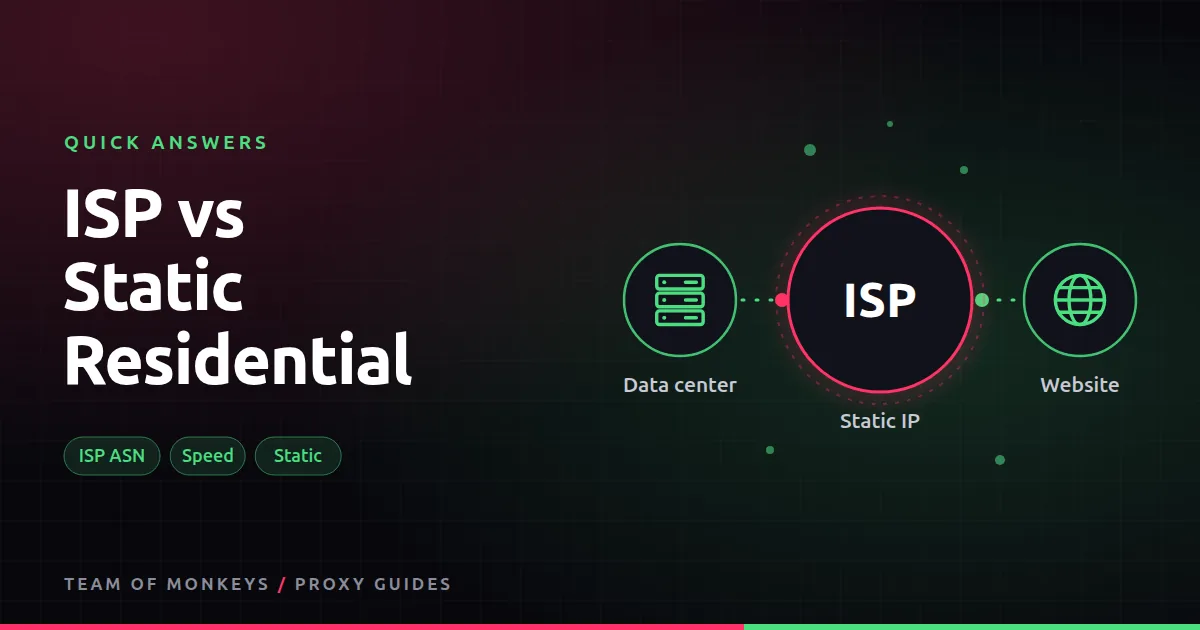
Usually, yes. Providers use "ISP proxy" and "static residential proxy" for the same product: an IP address registered to a consumer internet provider's ASN, but running on a server in a datacenter. You get residential-looking trust with datacenter speed, and the IP stays yours for the whole rental.
The fine print
A few providers sell "static residential" IPs that really are on home devices, which are slower and less stable. Ask which one you are getting, and check the ASN of a test IP yourself.

Also known as
ISP proxy, static residential, static ISP proxy, sticky residential (sometimes).
Learn more
- ISP proxies
- Static residential proxies
- ISP vs residential proxies
- What is an ASN?
- What an internet service provider is
- What an autonomous system is
- The regional internet registries
- ARIN on IPv4 transfers (how ISP blocks change hands)
Affiliate disclosure: Team of Monkeys is an affiliate of Geonode, Webshare and Rayobyte. Links and banners marked as sponsored, and links to Geonode, Webshare and Rayobyte in the text, use our referral links, and we may earn a commission if you buy through them, at no extra cost to you. Our explanations and comparisons are written to be useful whichever provider you choose.
Editorial note: Proxy providers change their pools, features and prices often, so treat any figures here as typical ranges at the time of writing and confirm current terms with the provider before you buy.
Editorial note: Proxy providers change their pools, features and prices often, so treat any figures here as typical ranges at the time of writing and confirm current terms with the provider before you buy.